
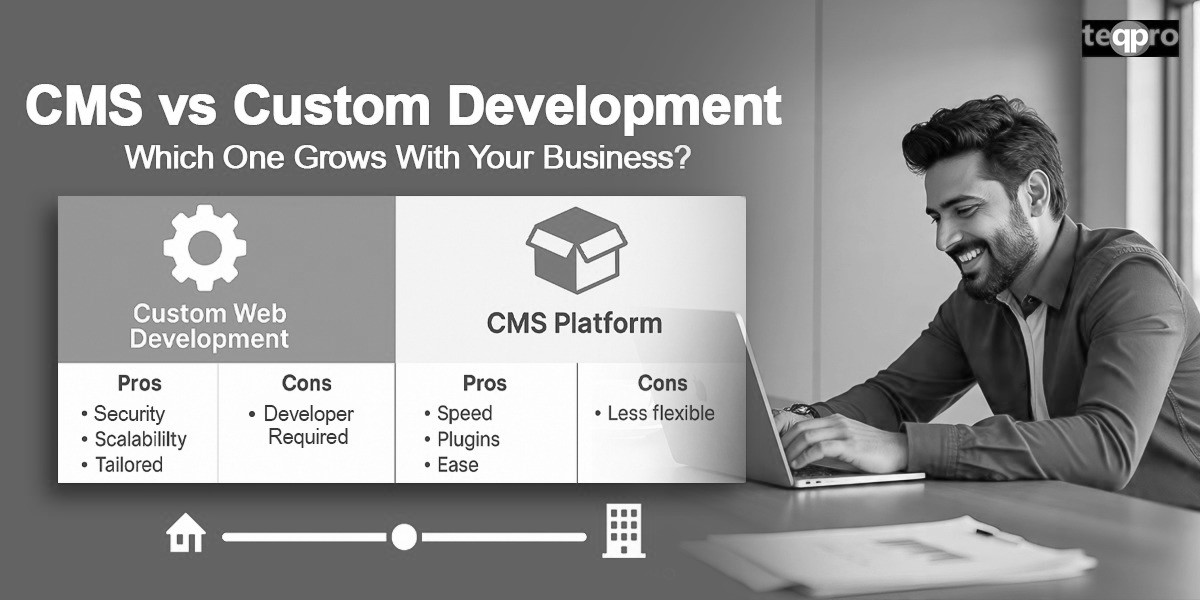
Most business owners start building a website without thinking about what kind of system will actually help them grow. In cities like Kolkata, Delhi, or Mumbai, people often launch websites quickly just to have an online presence. But doing it in a hurry can create problems later.
If the website is built on the wrong platform, it may load slowly, show up poorly in search results, or be hard to update. The backend setup matters a lot. If it’s too limited or overloaded with extra tools, you will spend more time fixing issues than running your business.
This choice is not about trends or popular tools. It’s about making sure your website stays useful and reliable as your needs change. Whether you are starting something small or planning to scale, this guide explains the difference between a CMS vs custom website. You’ll be able to decide what fits your business better.
Need help from a local expert? Book a free web consultation Contact us.
Custom web development means building your website from the base level. You don’t use templates. You don’t add pre-made plugins. Developers write the whole code to match how your business works. It’s usually done with HTML, CSS, JavaScript, or frameworks like Laravel or React.
This method gives you control over everything. You can plan how the website looks, how fast it loads, and how the backend works. If you need a custom search, a team dashboard, or links to other systems, they can all be included from the beginning.
A custom website also gives long-term benefits. It uses clean code, which helps the site load faster and work better. Search engines can read the site more easily. If something goes wrong, it’s easier to find the issue and fix it. You’re not relying on plugin updates or third-party fixes.
Want to make your website play an important role in your business? Custom website development services by Teqpro can help you stay in control and grow at your own pace.
It’s a website that is made from scratch for your business. You are not using ready-made templates. The layout, features, and structure are all created based on what your business needs, both now and in the future.
Yes. A custom site can be built with clean code and proper structure. It loads faster, avoids plugin clutter, and lets developers add schema and other SEO features directly. This helps your site rank better over time.
The cost depends on what features you need. A basic custom site can start around ₹25,000. If you want more pages, special tools, or custom systems like payment gateways, the cost will increase based on what’s required.
A CMS, or Content Management System, is a tool that helps you create and manage a website without knowing how to code. WordPress, Shopify, Wix, and Joomla are a few popular examples. They help you get started quickly.
For small businesses, this is helpful. You can pick a theme, install plugins, and get your website live without hiring a developer. If your needs are simple, you can post content, show your products or services, and make changes on your own.
But there are limits. These platforms are built to fit many users, not your specific business. This means you may not be able to adjust everything the way you want. Too many plugins can slow your site down or create security problems. Updates may break custom changes.
A CMS works well if your website is basic and you are not planning big changes. But if your business needs growth, you may run into problems with flexibility, speed, and control. Teqpro is here to help you grow your business.
CMS platforms help people create and manage websites without knowing how to code. You can post blogs, update content, add images, and change layouts using built-in tools. They’re useful for small businesses, bloggers, and service providers who want something simple.
A CMS can support SEO if it’s set up correctly. You can install plugins to add titles, meta tags, and sitemaps. But since CMSs rely on extra tools, they may slow your site down or create code that search engines don’t like.
WordPress is a good option for small service websites and blogs. Shopify works well for online stores. Both have strong support in India. Choose based on your goal, budget, and whether you need local payment support.
Custom CMS development means building a content system just for your business. It allows you to update your site easily while still having full control over features, layout, and speed. It’s a flexible option when common platforms don’t fit your needs.
A CMS framework is a tool developers use to build custom websites with editing features. It gives better control than using prebuilt CMS platforms. Developers can create cleaner code, faster pages, and options that suit your workflow.
The top CMS platforms include WordPress, Joomla, and Drupal. Shopify is best for eCommerce. The right choice depends on whether you want flexibility, blogging tools, or product sales. Each one has its own strengths and limits.
Website builders like Wix and Squarespace are easy to use and good for beginners. They offer drag-and-drop design tools. WordPress is better if you want more control. Choose based on how much time and control you want.
| Feature | CMS | Custom |
|---|---|---|
| Speed | Moderate | High |
| SEO | Plugin-dependent | Optimized by design |
| Core Web Vitals | Often fails | Can be improved directly |
| Cost | Lower upfront | Better value over time |
| Scalability | Limited | High |
Custom-built websites are usually faster because they use clean code and no unnecessary plugins. CMS platforms may load extra files, which can slow down the site. Speed is easier to manage with a fully custom setup.
CMS platforms are cheaper to launch. If you need a basic site and want to save money early, it’s a good option. But if your business grows fast, custom becomes more cost-effective in the long run.
It can work for a while, but as traffic grows or features get more complex, CMS can become slow or limited. Custom websites scale more easily because the structure is built for long-term use.
Also Read: Responsive Website Design Trend In 2025
There’s no single right answer. The decision depends on your goals, how much you can invest now, and what you expect in the future.
If your budget is tight and you need something basic, a CMS might be a practical place to begin. It’s faster to set up and easier to manage at first. But if performance matters, or if you’re planning to build something unique, custom is the smarter move.
Before you decide, ask these questions:
Also consider your region. In India, for example, you may need multilingual support or integrations with local payment gateways. These can be harder to manage with CMS.
If your site will drive business, build it to last. That’s where scalable website development gives you more freedom, less stress, and better ROI.
A CMS like WordPress works well for simple service sites. But if you want fast load times, better SEO, and custom logic like GST billing or Indian payment tools, a custom site will serve you better as you grow.
Use WordPress if your needs are very basic. If you expect your business to expand, or if you need custom features, hiring a developer is a smarter choice. You’ll get more control and fewer problems later.
Think about how your website will be used. If it’s just a digital brochure, CMS works. If it’s tied to sales, user experience, or operations, custom development gives you more power and flexibility over time.
Thinking long-term saves money. You might start simple, but if you see your site becoming a major business tool, the custom path avoids headaches later. Many startups begin small and later regret not investing in something flexible.
This is where custom website development for startups becomes a smart early decision.
Yes, but it’s not always easy. Moving to a custom build later means changing the structure, design, and maybe even the database. If you know growth is coming, it’s better to plan for it from the beginning.
CMS platforms allow some design control through themes and plugins. But if you want a unique layout or special functions, a custom site will give you full freedom to create exactly what you need.
It depends on the size and complexity of the project. A small business website typically takes around three to four weeks. For more complex projects, timelines vary, but usually range between two to three months. Larger platforms requiring integrations or specialized tools may take even longer.
CMS platforms are best when your needs are simple and time is tight. If you’re launching a blog, a personal portfolio, or a small service page, CMS works. You get pre-made tools, fast results, and no need for heavy coding knowledge.
But avoid CMS when:
The more your platform becomes part of your operations, the more likely it will hit the limits of a CMS. That’s when custom-built websites for small businesses bring clear value.
If your online store is small with limited products, CMS like Shopify can be a good start. But if your store has complex filters, custom delivery logic, or large product catalogs, a custom site is much better.
CMS platforms start to show limits as your business grows. They become slower with more plugins, and harder to manage if your needs change. For real flexibility and performance, a custom site works better in the long run.
Some CMS platforms can manage medium traffic levels if they’re optimized well. But very high traffic sites need better server setups and lean code, which is much easier to achieve with custom development.
Search engines care about how fast your site loads and how easy it is to crawl. Custom sites use clean code, so they load quickly and don’t include extra files. You also have control over how search engines see each page.
Developers can add structured data, fix layout shifts, and improve mobile experience. These changes make a big difference in ranking. With CMS, most of this depends on third-party tools, which adds bulk and slows things down.
Most CMS platforms depend on plugins for SEO. These plugins are helpful but not perfect. They can leave extra code on your pages or load scripts that slow down your site. You also have less control over page structure and markup.
If your business uses external tools like CRMs, ERPs, or payment gateways, you’ll need your website to connect with them smoothly. Custom websites make this much easier. You can control how data moves between systems without relying on plugins.
That’s where SEO-friendly web development gives you full flexibility. You don’t have to fix broken plugins or struggle with settings. Your site is built to perform from day one.
It’s the setup that helps search engines read your website. This includes fast loading speed, mobile design, clean code, and extra data like schema. When done right, technical SEO helps your site appear higher in search results.
CMS platforms are generally SEO-friendly. However, when it comes to advanced SEO or more technical aspects, they can be harder to manage compared to custom-built websites. CMS platforms often rely on plugins for SEO, which can slow down your site or generate messy code. Additionally, you have less control over elements like structured data, which is crucial for how search engines interpret your site.
Yes, and that’s one of their biggest advantages. With a custom site, developers can connect it to payment systems, CRM tools, or any other software you use. You don’t have to depend on external plugins.
If you’re thinking about building a custom site, choose a team that understands your goals. They shouldn’t just focus on how your site looks. A good team will ask how your business works, who your customers are, and what tools you need.
Look for a company that has built websites like yours. Check if they care about speed, SEO, and user experience. Make sure they offer help after the launch, not just before it. Ask if they can support updates or improvements later.
It also helps to work with people who understand your market. A custom web design company India based team will know how to include regional tools, payment systems, or tax logic. They’ll also be easier to reach when something needs to be fixed quickly.
DESIGNRUSH is here to help you provide the top Web Development Agency list, from which you can choose the right development partner for your website.
Look for an agency that has experience with similar businesses. Ask to see examples of their work. Make sure they offer support after the project is finished and can explain how their process works from start to finish.
They should give you a clear timeline, help you understand each step, and guide you on technical choices. A good company won’t just write code. They’ll think about how the website will support your goals.
Hiring local developers can be helpful because they understand your audience and business environment. They can also respond faster if you need support. For regional platforms, they may already know what tools or features are required.
Yes, it usually costs more at the start because everything is built from scratch. But over time, you save money by avoiding plugin issues, speed problems, and full redesigns. It’s a long-term investment.
Custom development is better because it gives you full control over site speed, structure, and technical setup. This makes it easier for search engines to read your site and rank it higher in results.
Yes, you can move from a CMS to a custom site, but the process can take time. You may need to change page layouts, fix links, and move data manually. Planning ahead makes it smoother.
It depends on the project. A small site might take three to six weeks. A more complex platform that needs extra features or integrations could take two to three months, sometimes longer.
Custom websites are usually more secure because they don’t rely on third-party plugins. You can control how data is stored and how users interact with the site. Fewer outside tools means fewer risks.
A CMS is helpful when your needs are basic, your time is limited, or your budget is tight. It works fine for simple content and quick launches.
But if your website is tied to your business performance, custom development is worth the investment. You’ll get better SEO, more speed, and a structure that grows with you.
Still unsure which is best for your business? Let’s talk — get your free expert consultation.